
A sofa whose fabric contains soon-to-be-banned water-repellent treatments, a coffee table impossible to repair because no spare parts exist: these concrete situations now weigh as heavily as the choice of color or style in an interior design project. Current decor trends are no longer limited to a seasonal palette. They incorporate regulatory constraints and sustainability logics that change the way we furnish and arrange spaces.
Upholstery Fabrics and PFAS: A Constraint Redefining Your Fabric Choices
We often start a decor project with curtains, cushions, or the sofa covering. This reflex will need to be accompanied by a new verification. French law n° 2025-188 of February 27, 2025, provides for the prohibition of PFAS in upholstery fabrics starting January 1, 2030. PFAS, these per- and polyfluoroalkyl substances used to make fabrics water-repellent or stain-resistant, are present in a significant portion of decorative textiles sold today.
Specifically, if you buy a sofa or curtains treated with a water-repellent finish, check the composition on the label or product sheet. The mentions “stain-resistant treatment” or “water-repellent” often mask the presence of PFAS. To lean towards a decoration with Habitat Guides, you can already favor fabrics made of raw linen, untreated cotton, or wool, which do not require any chemical finishes of this type.
This constraint pushes manufacturers to reformulate their ranges. For us consumers, it is a concrete sorting criterion when choosing an interior textile: a fabric without PFAS treatment ages differently, but it remains compatible with daily use if we choose a sufficiently dense weight and a fiber suitable for the room.

Furniture Repairability: What the European ESPR Regulation Changes
Competitors talk about “sustainability” as a style. In practice, the durability of furniture is set to become a technical obligation. The European regulation on the eco-design of sustainable products (ESPR) includes furniture within its scope. New requirements are expected between 2028 and 2030, including the deployment of digital product passports for certain categories of furniture.
This digital passport will contain information about the composition, repairability, and traceability of each piece. For a decor purchase, this means that we will soon be able to know, before buying a chair or a dresser, whether spare parts exist, whether the furniture is disassemblable, and whether its materials are recyclable.
Criteria to Check Before Buying Furniture Today
Without waiting for the regulation to come into effect, we can already apply a practical checklist:
- Is the assembly based on accessible screws or permanent glue? A screwed piece of furniture can be repaired, a glued one must be thrown away.
- Does the manufacturer offer a catalog of spare parts (legs, hinges, handles)? Some French brands of solid wood furniture already do this.
- Is the wood or metal used identified by species or alloy on the product sheet? Clear traceability indicates a manufacturer who anticipates future obligations.
These checks take a few minutes and prevent ending up with unusable furniture after a simple domestic accident.
Reuse and Second-Hand Furniture: A Structured Decor Sector
Finding an antique piece of furniture is nothing new. What is changing is the structuring of the sector. The French specifications for the waste of furniture elements sector (2024-2029 period) strengthens the objectives of repair, reuse, and recycling. Eco-organizations must now direct more furniture towards a second life rather than material recycling.
For an interior design project, this opens up concrete options. Resource centers and specialized platforms offer refurbished furniture, sometimes with a warranty. You can find dressers, buffets, or armchairs whose quality of manufacture far exceeds that of a new entry-level piece.
Combining Reused Pieces and New Furniture in the Same Interior
A common mistake is to want an interior that is “all vintage” or “all new.” A deliberate mix of reused furniture and contemporary pieces results in a more personal and coherent outcome than a uniformly applied style. A 1960s buffet works very well next to a contemporary metal table, provided that a logic of proportions and finishes is respected.
Opinions vary on this point: some prefer to fully restore a found piece (sanding, new color), while others keep it in its original state to maintain the patina. Both approaches are valid. What matters is that the furniture integrates into the actual use of the room, not just its aesthetics.
Colors and Natural Materials: Choosing Based on the Room’s Light
Trend palettes lean towards deep shades (terracotta, sage green, warm brown) and raw materials (stone, wood, terracotta). On paper, this is appealing. In practice, the natural light of the room determines whether a color works or overwhelms the space.
A north-facing room with few openings struggles with a dark terracotta wall, which absorbs light and visually shrinks the volume. A better result is achieved with a diluted version of the same shade, or by reserving the intense color for a single well-lit wall.
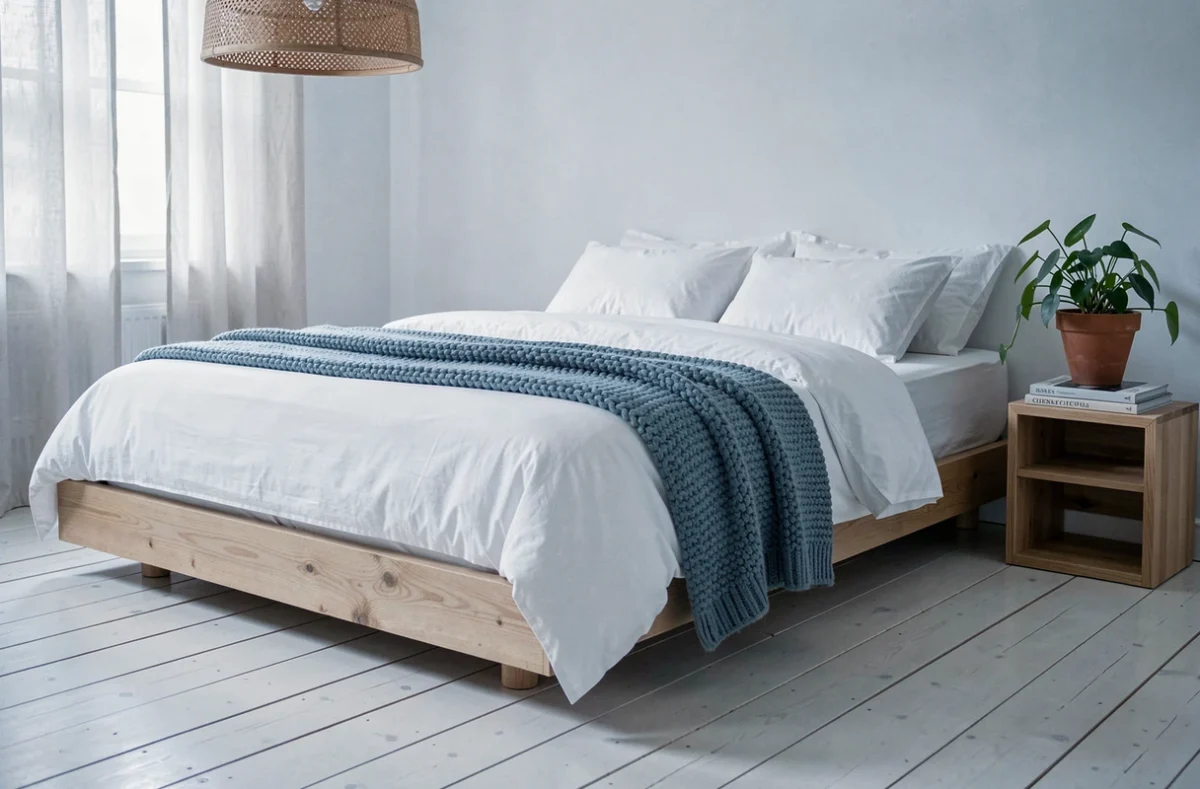
For materials, light wood (ash, beech) reflects more light than dark walnut. In a poorly lit room, this technical choice has more impact on the ambiance than any seasonal trend. Lasting interior decoration starts from the actual conditions of the space, not from a photo on a social network taken in artificial light.
Before repainting or changing furniture, you can test a color with a sample placed in the room for several days, observed at different times. This simple gesture avoids costly mistakes and ensures a result that truly corresponds to your daily life.