
You take a beta-blocker every morning to regulate your blood pressure or calm a rapid heartbeat. One evening, you’re offered a glass of wine. The question arises: what happens when these two substances intersect in the body? Both beta-blockers and alcohol affect the cardiovascular system, and their combination can provoke reactions that the body struggles to manage.
Beta-blockers and blood pressure: a mechanism to protect
Beta-blockers work by blocking certain receptors in the heart and blood vessels. This blockage slows the heart rate and lowers blood pressure. The medication maintains a precise cardiovascular balance, calibrated by the doctor according to your health condition.
Alcohol, on the other hand, dilates blood vessels. It also causes a decrease in blood pressure. When the two effects add up, the drop in blood pressure can become abrupt. This is known as hypotension, which manifests as dizziness, blurred vision, or a sudden feeling of weakness.
To fully understand the risks associated with beta-blockers and alcohol, it is important to keep in mind that these two substances do not cancel each other out: they mutually reinforce each other on blood pressure, which disrupts the treatment.
Hypotension and heart rhythm disturbances after a glass of alcohol
Have you ever noticed that warm feeling in your face after a drink? It’s the vasodilation caused by alcohol. In a person on beta-blockers, this vasodilation adds to the one already induced by the medication.
The main risk is discomfort due to a drop in blood pressure when standing, known as orthostatic hypotension. In practical terms, you get up from the couch or a chair, and your blood pressure drops so quickly that the brain briefly lacks blood. The result: dizziness, or even loss of consciousness.

This scenario happens more often than one might think during evenings, afterworks, or festive meals. The person takes their medication in the morning, consumes alcohol in the evening, and stands up abruptly. The discomfort occurs unexpectedly.
Beyond blood pressure, alcohol can also disrupt heart rhythm. Beta-blockers are prescribed to stabilize this rhythm. Alcohol can mask the warning signals of a rhythm disorder by dulling the perception of symptoms such as palpitations or shortness of breath. The patient does not feel what their heart is undergoing.
The liver at the center of the problem: metabolism of beta-blockers and alcohol
The liver degrades both alcohol and most beta-blockers. These two substances mobilize the same liver enzymes, particularly cytochromes. When the liver processes alcohol as a priority, the medication remains in the blood longer. Its effect is then prolonged and amplified.
Regular alcohol consumption can permanently alter the hepatic metabolism of beta-blockers. In a chronic consumer, the liver adapts by speeding up the degradation of certain molecules. The medication is then eliminated too quickly, and the treatment loses its effectiveness. Blood pressure or heart rate are no longer properly controlled.
This hepatic mechanism explains why two patients on the same treatment can react very differently to the same glass of wine. The alcohol consumption profile changes the pharmacological equation.
Symptoms to watch for after drinking while on treatment
Here are the signs that should alert a person on beta-blockers who has consumed alcohol:
- Dizziness or faintness when standing up, indicating a significant drop in blood pressure
- Unusual fatigue or excessive drowsiness, reflecting a cumulative sedative effect between the medication and alcohol
- Unusually slow or irregular heart rate, noticeable as diffuse chest discomfort
- Nausea or cold sweats occurring within an hour after drinking alcohol
If these symptoms occur, one should lie down, elevate the legs, and call a doctor. Do not wait for it to pass on its own, especially in an elderly or polymedicated person.
Seniors on beta-blockers: an increased risk of falls amplified by alcohol
Recent recommendations on hypertension emphasize the notion of biological age rather than chronological age. A fragile 75-year-old patient does not react like a healthy 45-year-old adult. In seniors, the combination of beta-blockers and alcohol multiplies the risk of falls and syncope.
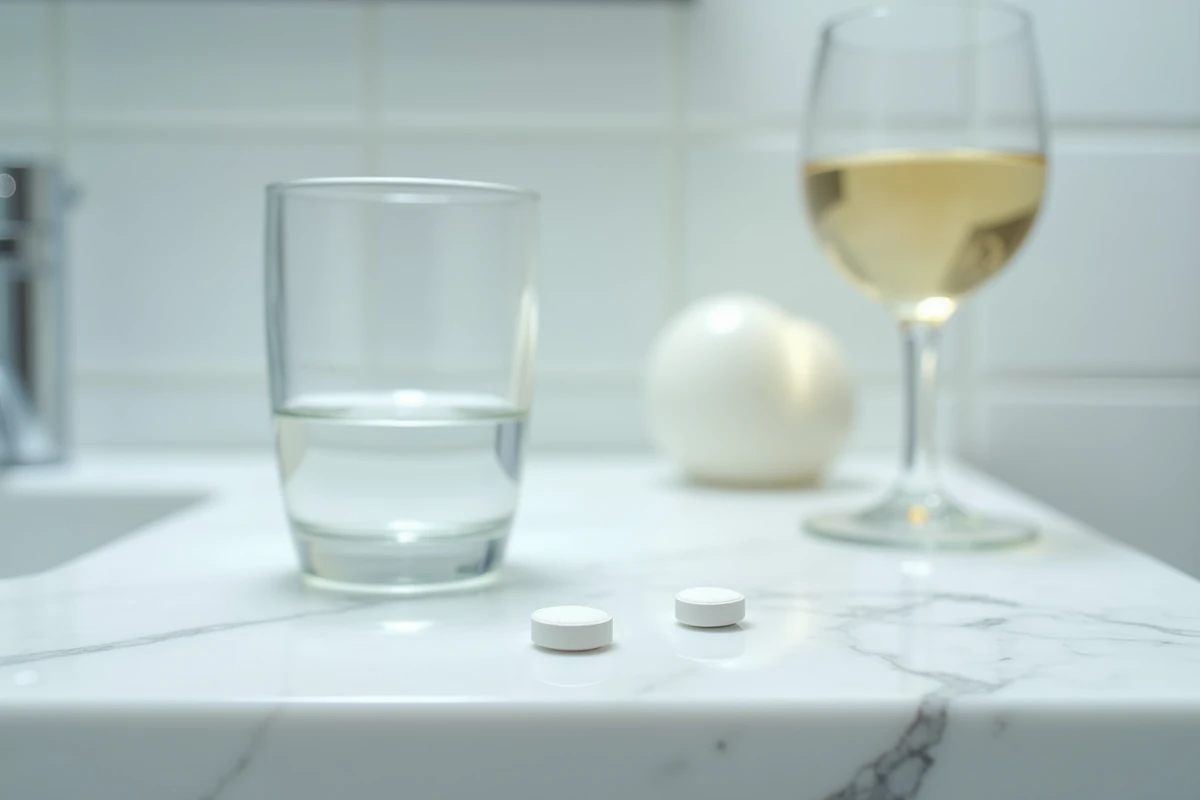
Several factors accumulate. The sensitivity of cardiac receptors changes with age. The liver degrades substances more slowly. The body water mass decreases, which concentrates alcohol more in the blood. Add a beta-blocker that slows the heart and lowers blood pressure: even the slightest glass of alcohol becomes a factor of imbalance.
Mental confusion, often underestimated, represents another risk in elderly patients. A senior on cardiac treatment who consumes alcohol may exhibit signs resembling a stroke, while it is actually a drug interaction.
Good reflexes to reconcile cardiac treatment and social life
Should one give up all social life while on beta-blockers? No, but a few precautions can change the situation.
- Discussing alcohol consumption, even moderate, with their doctor or pharmacist during prescription renewal
- Avoiding drinking in the hours following the medication intake, when its blood concentration is highest
- Getting up slowly after sitting or lying down, to give the body time to adjust blood pressure
- Never abruptly stop a beta-blocker to be able to drink: sudden cessation exposes one to rebound effects with increased heart rate
The interaction between beta-blockers and alcohol is not a question of precise quantity, but of individual fragility. The same drink may be harmless for a stable patient and cause discomfort for another. The most reliable reflex remains to discuss it with the prescriber, who will adjust the treatment or advice to your actual cardiac situation.