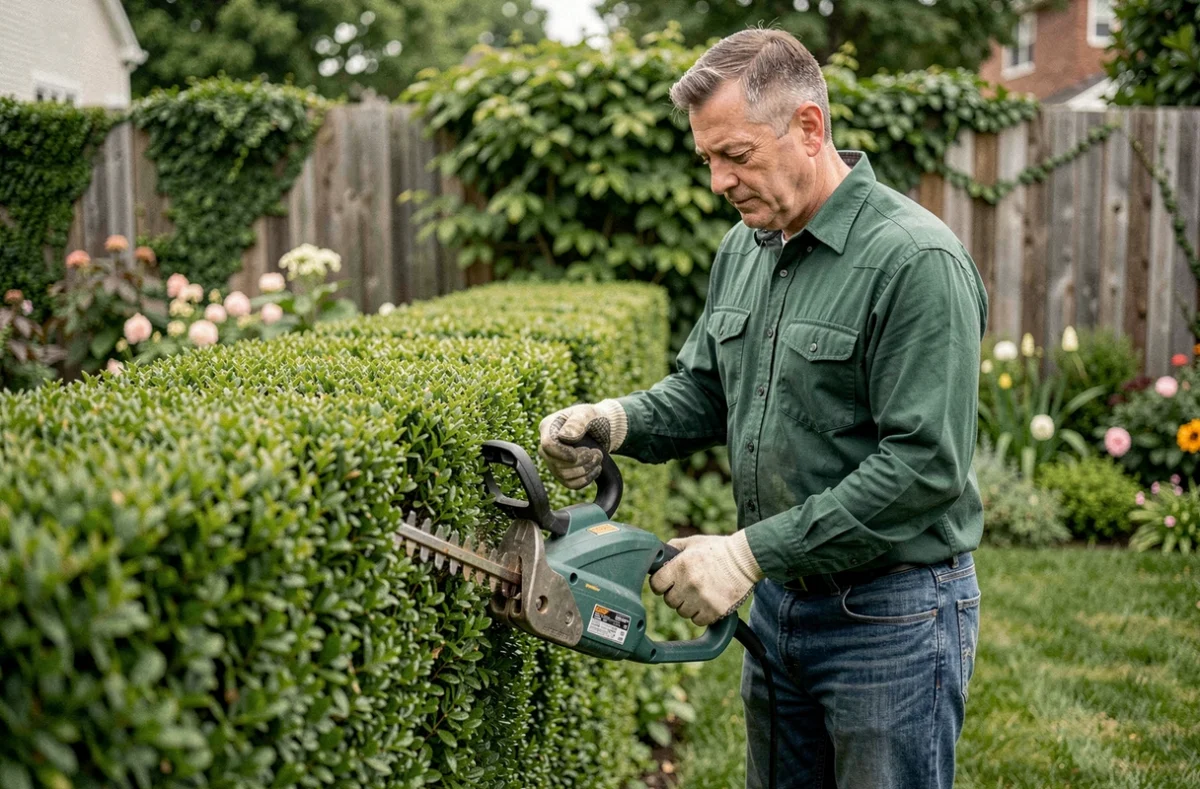
An electric hedge trimmer operates by shearing: two toothed blades slide in opposite directions, powered by a motor connected to mains electricity or a battery. The choice of the right model relies less on the brand than on three technical parameters directly related to the hedge to be maintained: the spacing of the teeth, the cutting length, and the type of power supply.
Tooth Spacing and Cutting Diameter: The Primary Technical Criterion
The spacing between the teeth of the blade determines the maximum diameter of branches that the hedge trimmer can cleanly cut. A regularly trimmed boxwood or privet hedge produces only fine shoots. A neglected palm laurel or thuja for two seasons generates much thicker woody branches.
Before examining the power or battery life, measure the diameter of the largest branches of your hedge. The tooth spacing must exceed this diameter to prevent the machine from jamming or tearing the bark instead of cutting. Entry-level models have reduced spacing, sufficient for regular maintenance. Models with wider-spaced teeth can accept thicker branches but produce a less clean finish on young shoots.
Comparative sheets available on taille-haie-electrique.com allow you to filter models according to this spacing, simplifying the pre-selection when you know the type of plants to be trimmed.

Blade Length of an Electric Hedge Trimmer: Adapting the Cut to the Hedge
The blade length determines the cutting width in a single pass. On a small decorative hedge or a topiary, a short blade offers more maneuverability and precision. On a fence hedge several meters long, every additional centimeter of blade reduces the number of passes and the working time.
The downside of a long blade is the weight. A heavier device tires the arms and shoulders, especially when cutting vertically on the sides of a tall hedge. The blade length should therefore be chosen based on two concrete elements:
- The depth of the hedge: a narrow hedge (less than an arm’s span) does not justify a long blade, which would become cumbersome
- The total linear length to be trimmed: beyond a few meters, a longer blade saves real time on each session
- The working posture: for high trimming, with arms raised, a shorter and lighter model protects the joints
Corded or Battery: Which Electric Hedge Trimmer for the Terrain
The corded electric hedge trimmer draws its power from the mains via an extension cord. Its power remains constant from start to finish, with no autonomy limit. In return, the cable restricts the working radius and requires constant monitoring to ensure it does not pass through the cutting area.
The battery model eliminates this constraint. The freedom of movement radically changes the comfort of working on a long hedge or one far from the house. The trade-off lies in autonomy and power, which decreases at the end of the charge on some models.
Battery Voltage and Real Autonomy
Batteries differ by their voltage. A higher voltage battery delivers more torque, which is important for semi-woody branches. A lower voltage battery is suitable for light maintenance of regularly trimmed hedges.
Autonomy also depends on the capacity in ampere-hours. A high-capacity battery weighs more. For a modest-sized garden, a standard battery is sufficient to complete the trimming in a single charge. For large linear areas, consider a second battery or check the recharge time.
Battery Replaceability: A Future Criterion
The European regulation on batteries stipulates that, starting from February 2027, there will be an obligation to make portable batteries removable and replaceable by the end user. In practice, prioritize a model whose battery can be removed without specific tools and for which the manufacturer sells replacement batteries. A battery-powered hedge trimmer can last for many seasons if the cell remains accessible.
Trimming Periods and Local Regulations: What Governs Use
The French Office for Biodiversity and the LPO recommend avoiding hedge trimming from March 15 to July 31, the nesting period for birds. This recommendation applies to both individuals and professionals, although regulatory constraints differ for agricultural operators.
In practice, inspect each section of the hedge before starting. If an active nest is visible, leave that section undisturbed, regardless of the date.
The hours of use for a hedge trimmer, even electric, vary from one municipality to another. There is no uniform national schedule for noisy gardening. Check the municipal or prefectural order of your municipality before planning a trimming session on weekends or in the evening: the authorized time slots and possible penalties differ significantly from one area to another.
Blade Maintenance: Protecting the Cut and Lifespan
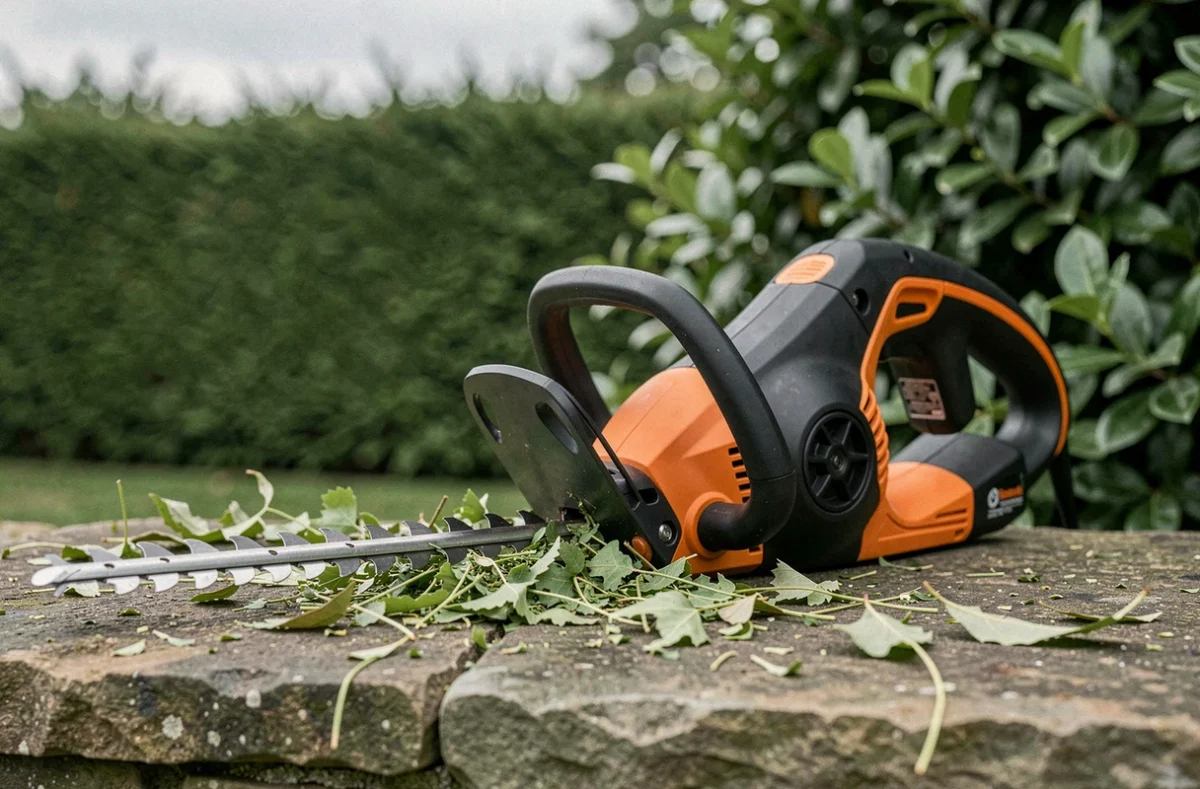
A poorly maintained blade crushes branches instead of cutting them, which promotes fungal diseases on plants. After each use, clean the sap and resin residues with a cloth soaked in alcohol or an appropriate product. Sharpen the teeth at least once per season if you are trimming resinous species like thuja.
Lubricate the blades before storing the device to limit oxidation. This gesture takes a few minutes and preserves cutting quality for several years. An electric hedge trimmer requires little mechanical maintenance compared to a petrol model, as long as the blade remains in good condition.
The choice of an electric hedge trimmer comes down to a precise match between the existing hedge and three characteristics of the machine: the tooth spacing for the cutting diameter, the blade length for the volume of work, and the power supply mode for the distance and duration of use. Everything else, such as a rotating handle, anti-vibration system, and weight, relates to comfort, which matters, but does not compensate for poor initial sizing.