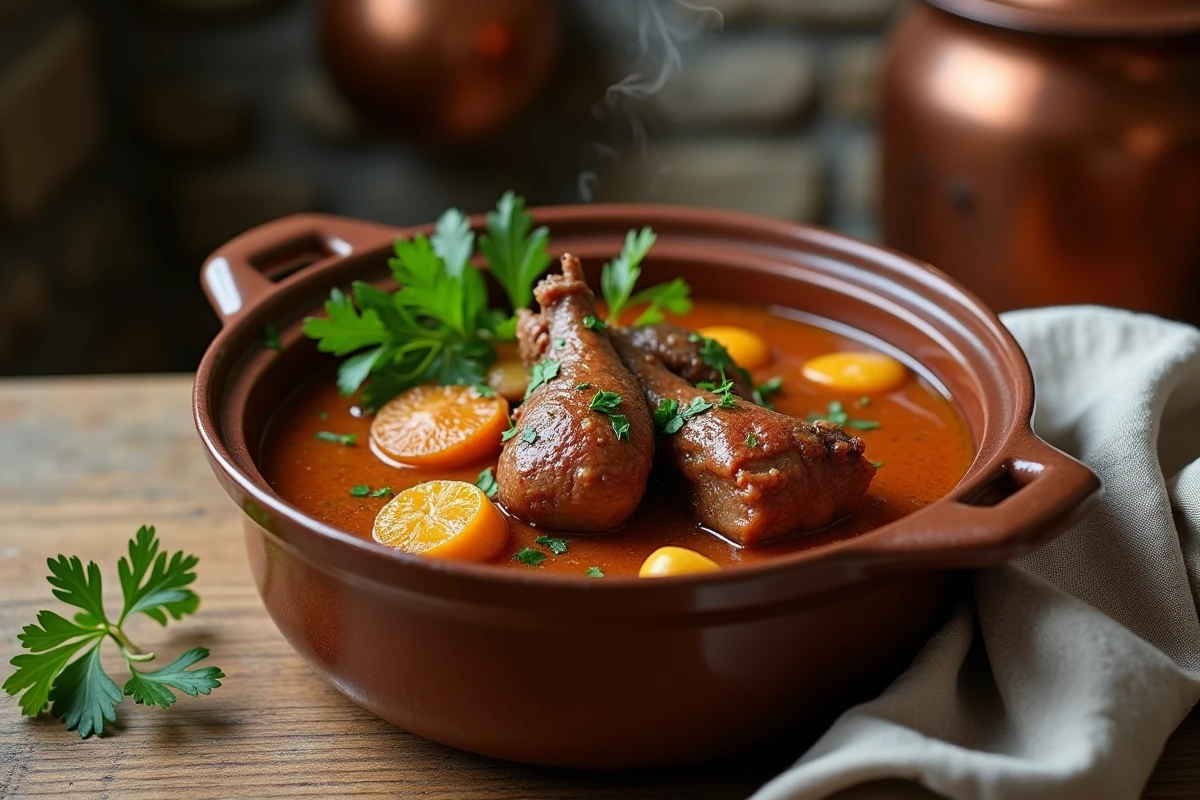
Pork foot is among the richest cuts in gelatin in traditional French cuisine. This gelatin, derived from the prolonged cooking of collagen found in connective tissues, tendons, and cartilage, releases amino acids such as glycine and proline. These compounds contribute to the renewal of joint tissues, which explains the growing interest in this cut in the context of osteoarthritis.
Pork foot collagen and digestion: what really happens to the joints
The collagen present in pork foot belongs to the family of structural proteins. During cooking, it transforms into gelatin, the substance that causes a broth to set into jelly in the refrigerator. Many sources attribute a direct effect of this gelatin on articular cartilage.
The biochemical reality is more nuanced. Dietary collagen is fully digested into amino acids before being absorbed by the intestine. It never reaches the joints in its original form. The body breaks it down into glycine, proline, hydroxyproline, and other amino acids, then uses them according to its needs, with no guarantee that they will be redirected to cartilage synthesis.
This distinction is fundamental to understanding the benefits of pork foot for osteoarthritis without falling into simplification. Consuming pork foot provides useful building blocks for joint metabolism, but this mechanism remains indirect.

Dietary collagen and hydrolyzed collagen: two distinct realities
The studies showing a measurable effect on osteoarthritis focus on standardized hydrolyzed collagens, meaning collagen peptides that have been industrially fragmented to facilitate intestinal absorption. These products have a much lower molecular weight than the gelatin obtained by cooking a pork foot.
Raw dietary collagen and hydrolyzed collagen supplements are therefore not interchangeable in terms of bioavailability. Eating pork foot provides relevant amino acids, but not in the same proportions or with the same effectiveness as a calibrated supplement.
Pork foot bone broth: nutrients and limits for joint health
Bone broth made from pork feet is the most common way to take advantage of their gelatin. This broth concentrates several nutrients that are interesting for joint comfort and bone health.
- Minerals such as calcium, magnesium, phosphorus, zinc, and selenium, gradually extracted from the bones and cartilage during long cooking
- Amino acids (glycine, proline) that contribute to the synthesis of endogenous collagen and the repair of connective tissues
- Significant amounts of gelatin, which can contribute to digestive comfort by strengthening the intestinal lining
This nutritional profile explains why bone broths made from feet have long been used in kitchens around the world to support recovery or aid aging joints.
Saturated fats and purines: the trade-offs to know
Pork foot is not a trivial food metabolically. The feet have a notable load of saturated fats and purines. Purines are converted into uric acid in the body, which can worsen gout or create additional joint inflammation in at-risk individuals.
For those suffering from metabolic disorders, overweight, or hyperuricemia, regular consumption of very fatty bone broth deserves to be discussed with a healthcare professional. Skimming the broth after cooling helps reduce lipid content without losing gelatin and minerals.
Histamine and long cooking: an unknown trap for arthritic individuals
Bone broths made from pork feet often require several hours of cooking to extract maximum gelatin. This prolonged cooking promotes the formation of histamine in the liquid.
Nutritherapists have been warning for a few years about the risk of reactions in individuals sensitive to histamine. Symptoms can include increased joint pain, headaches, digestive issues, or skin reactions. For an arthritic person looking to reduce inflammation, the effect can be counterproductive.
Some precautions can help limit this risk:
- Reduce the cooking time of the broth (two to three hours instead of an entire night) to limit histamine accumulation
- Consume the broth fresh rather than reheated after several days in the refrigerator, as histamine continues to form during storage
- Immediately freeze uneaten portions to block histamine production

Pork foot and osteoarthritis: what place in an anti-inflammatory diet
Osteoarthritis is a chronic disease that alters cartilage and adjacent tissues. Diet plays a supportive role, not a treatment. Pork foot fits into this logic: it provides useful amino acids for the cartilage matrix but does not replace medical follow-up or a comprehensive dietary strategy.
A joint-friendly diet relies on a sufficient intake of omega-3 fatty acids (fatty fish, rapeseed oil), vitamin C (fresh fruits and vegetables, which stimulate endogenous collagen synthesis), and antioxidants that limit oxidative stress on joints. Pork foot can complement this foundation, provided it is not the sole lever.
Overweight remains the most documented aggravating factor in osteoarthritis, particularly for weight-bearing joints like the knee and hip. Adipose tissues produce inflammatory hormones (adipokines) that intensify cartilage degradation, even in non-weight-bearing joints like the fingers.
Incorporating pork foot or bone broth into one’s diet makes sense as a supplementary source of glycine, proline, and minerals. But expecting this single food to slow down established osteoarthritis would be to overestimate what digestion can actually deliver to the cartilage.