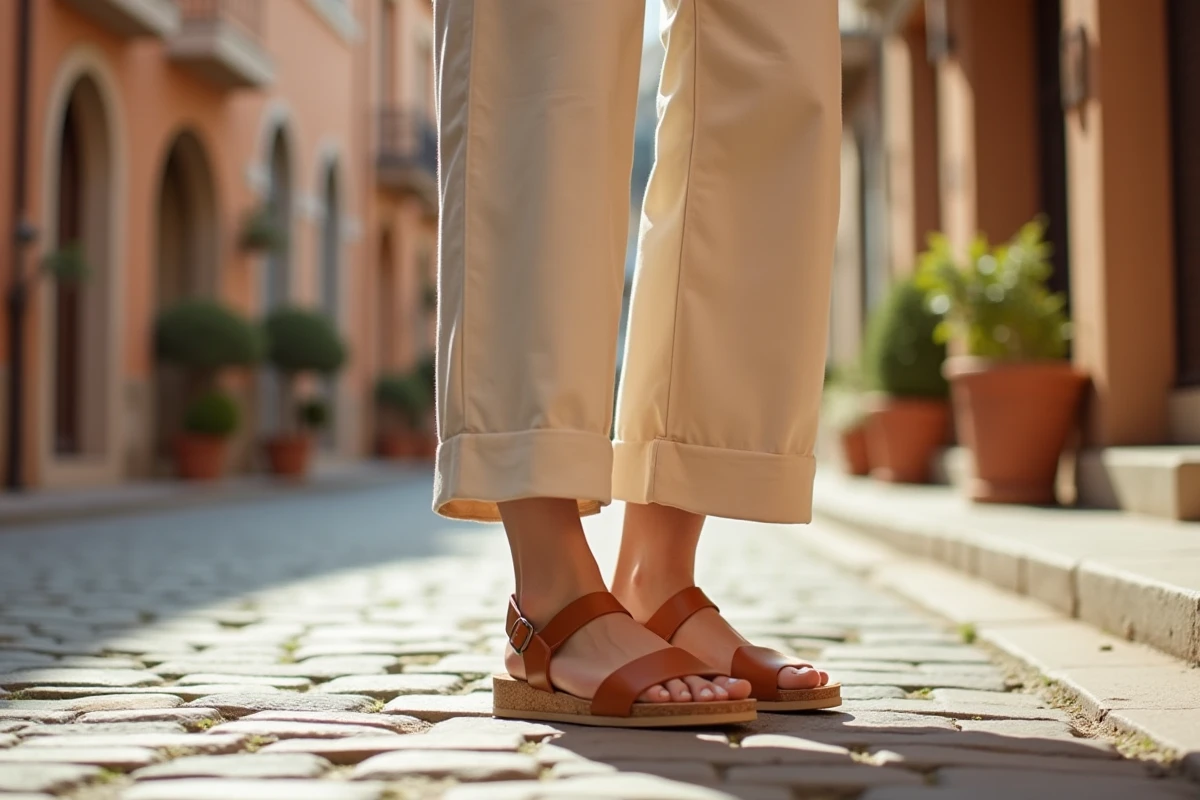
The comfort sandal market has long revolved around Birkenstock, a German brand whose cork sole and anatomical footbed have set a standard. In 2025, this segment is attracting new manufacturers who no longer settle for simply copying the Arizona or Boston silhouette.
Some are betting on traceable vegan materials, while others focus on technical soles derived from running. The competitive landscape has fragmented, and the criteria for choice now go beyond just the price-to-visual resemblance ratio.
Transparency and sustainability: the area where Birkenstock is falling behind
The traceability of materials is becoming an increasingly decisive criterion in choosing a comfort sandal. Birkenstock, despite its artisanal brand image, is criticized by the platform Good On You for its lack of transparency regarding its supply chain. The evaluation focuses on working conditions, environmental impact, and animal welfare.
In contrast, European brands like NAE and Will’s Vegan Store publish online the origin of their factories, their audits, and their certifications. Their sandals use materials derived from agricultural waste (corn, grape, apple), with detailed traceability that the major historical players do not offer. Good On You rates them as “Good” or “Great” in sustainability.
For those looking for alternatives to Birkenstock’s competing brands based on ethical criteria, these vegan manufacturers represent a distinct category, separate from mere aesthetic “duplicates” sold on marketplaces.
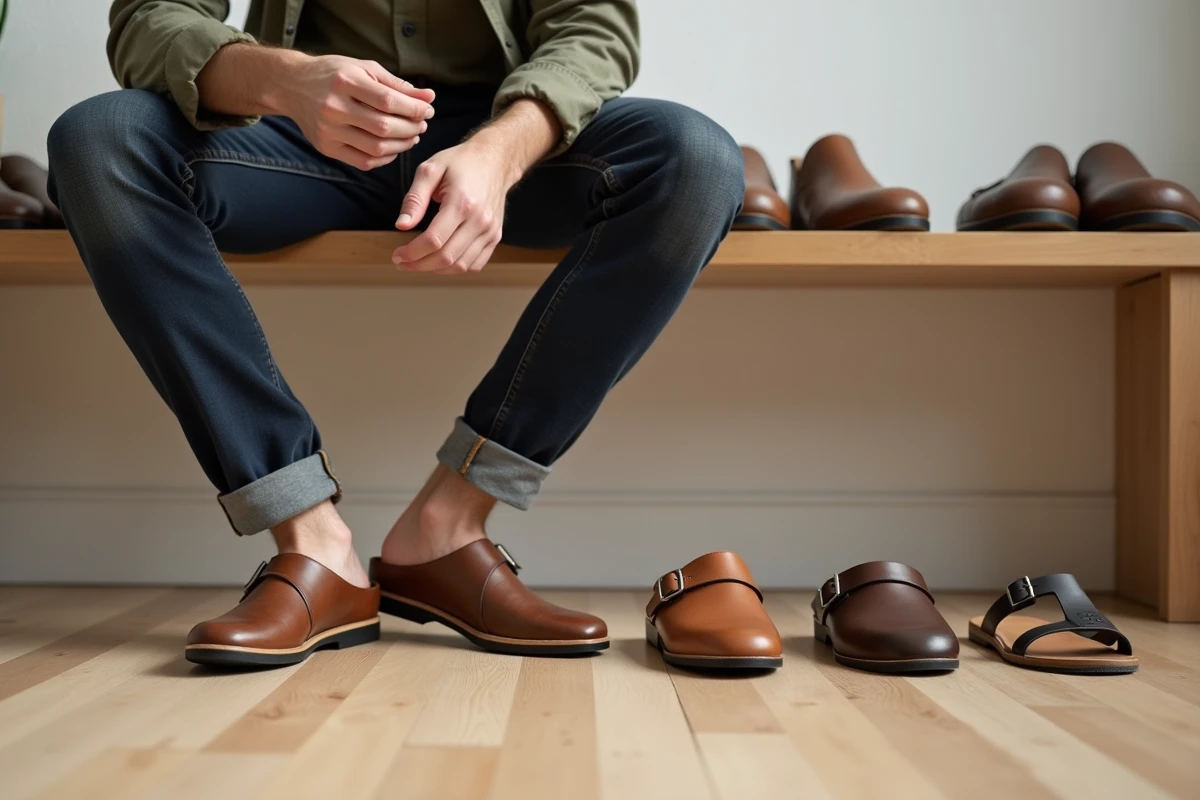
Vegan sandals made from agricultural waste: the value of alternative materials
The “vegan” argument alone is not enough to guarantee comfort. Grape or apple leathers remain composite materials, often associated with a polyurethane or organic cotton backing. Their initial flexibility differs from that of tanned leather, and their lifespan heavily depends on the finishes.
NAE, based in Portugal, offers sandals with recycled cork soles and uppers made from corn waste. The brand details each component on its product sheets. Will’s Vegan Store, on the other hand, manufactures in Europe using solvent-free adhesives and natural rubber soles.
Field reports vary on the longevity of these materials in the face of intensive daily use. A plant-based leather ages differently than cowhide, sometimes developing a surface appearance that changes more quickly. For occasional or urban use, the difference remains marginal. For long summer walks, the question deserves to be asked before purchase.
Comfort sandal brands outside the vegan segment: Crocs, Scholl, and the outsiders
The ergonomic sandal segment is not limited to the confrontation between leather and plant-based alternatives. Crocs has expanded its range with LiteRide sole models designed for prolonged use, appealing to a younger audience than that of Birkenstock. The price positioning remains significantly lower.
Scholl, historically associated with foot wellness, occupies a different niche. Its sandals incorporate bioprint sole technologies, focusing on arch support. Scholl and Birkenstock do not target the same use: the former aims for claimed orthopedic comfort, while the latter plays more on fashion identity.
Among the outsiders, brands like ESSĒN or Elk, positively rated by Good On You, combine a clean design with small-batch production. Their distribution remains confidential, primarily online, limiting the opportunity to try before buying.
Criteria to differentiate these brands
- The composition of the sole: natural cork, recycled cork, EVA foam, or rubber. Each material offers different cushioning and durability, and the choice depends on the type of ground and frequency of use.
- The published traceability: some brands detail the origin of each component, while others settle for a generic label. Checking product sheets or Good On You profiles allows for comparison on concrete bases.
- The price in relation to lifespan: a sandal under 30 euros may be suitable for a season, but models between 80 and 120 euros generally offer a better cost per year of use.
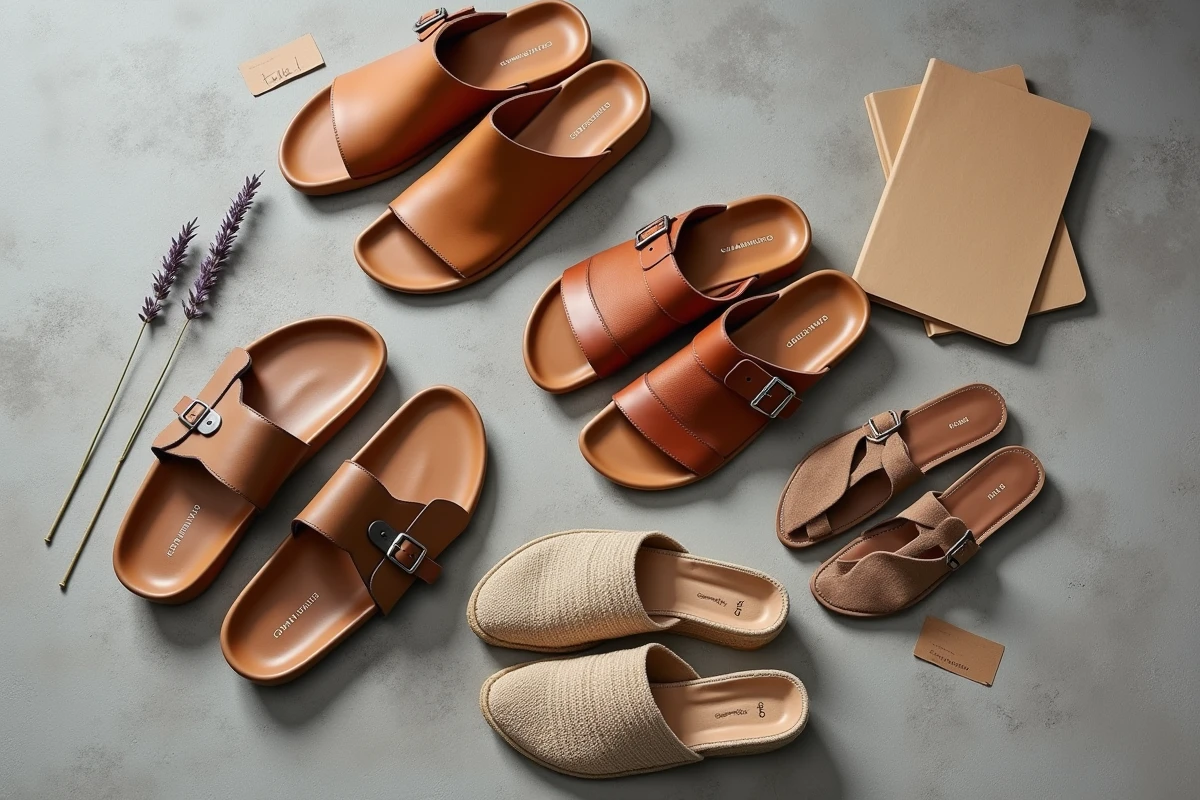
Choosing an alternative to Birkenstock based on actual use
The central question is not about resemblance to the Arizona, but about use: daily urban walking, standing all day at work, beach outings, or pairing with a specific wardrobe.
For prolonged professional use (health, hospitality), the anatomical soles of Birkenstock or Scholl remain the documented references. For fashion and occasional use, European vegan brands offer a coherent proposition with verifiable ethical commitment.
No brand ticks all the boxes at once: orthopedic comfort, complete traceability, accessible price, and maximum durability. The comfort sandal market in 2025 no longer operates as a head-on race against Birkenstock, but as an archipelago of specialized proposals, where the choice depends as much on the buyer’s values as on the shape of their foot.