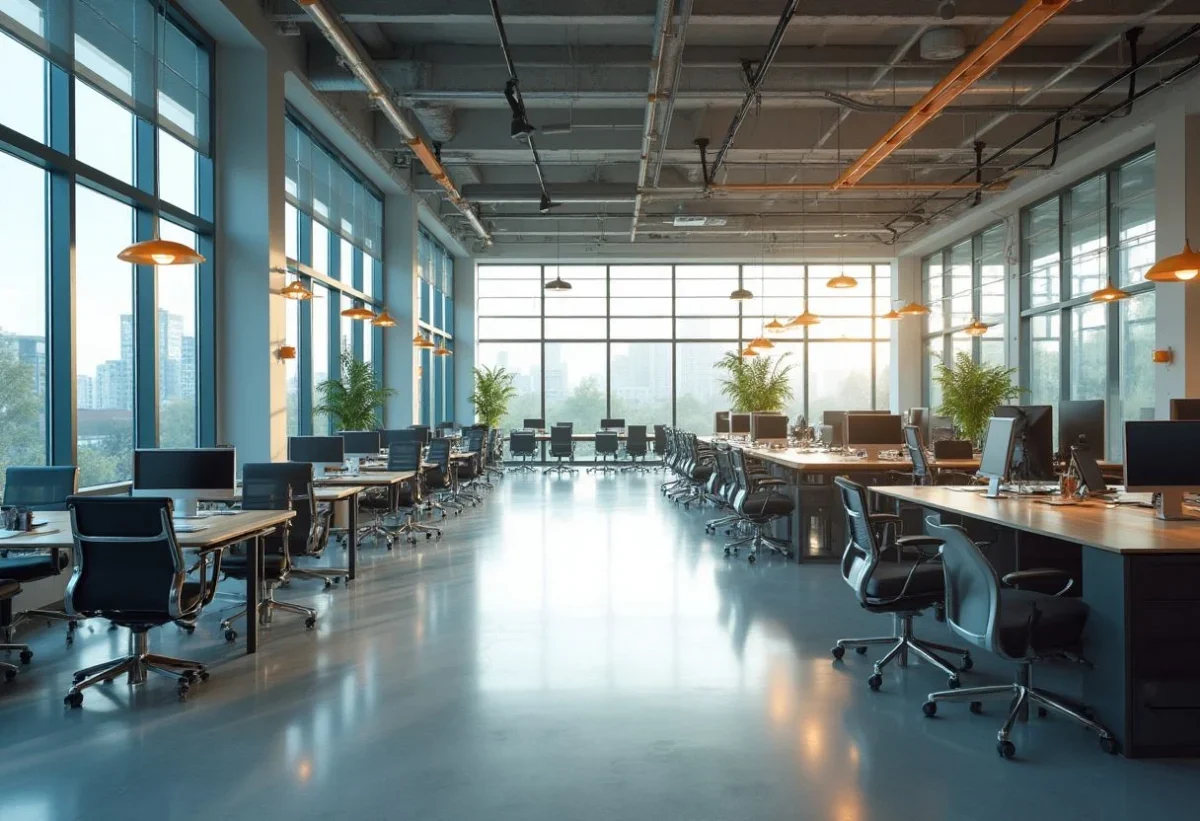
Open workspaces, or open spaces, have become ubiquitous in modern companies. They promise a dynamic environment that fosters collaboration, innovation, and creativity. However, designing such a space is not simply about tearing down walls. Several elements must be considered to create a harmonious setting that meets employees’ needs while optimizing productivity and well-being.
Space Optimization and Flow
For employees to feel comfortable and work efficiently, it is essential to maximize the use of space while ensuring smooth circulation between different workstations.
- Strategic Spatial Planning: Start by analyzing the layout of your space. Identify areas that need to be quickly accessible and those that require more privacy. Create wide aisles to allow easy passage for people and equipment.
- Collaboration Spaces: Set up areas dedicated to spontaneous meetings and small group discussions, equipped with high tables or poufs. This avoids disturbing those who work in silence while encouraging the exchange of ideas.
- Concentration Zones: Provide quiet spaces where employees can retreat to work on tasks requiring special attention. These areas can be created with acoustic separators or individual booths.
Furniture Selection
The choice of office furniture plays a crucial role in the atmosphere and comfort of an open space. Each element must be carefully selected to integrate harmoniously into the whole.
Opt for modular furniture that can be easily rearranged based on needs. Height-adjustable desks allow employees to vary their working position, which is beneficial for their health. Incorporate effective storage solutions to avoid clutter and maintain an orderly work environment. Finally, prioritize durable and quality materials to ensure the longevity of the furniture.
Technology and Connectivity
Technology is the cornerstone of any modern business. A well-designed open space must offer efficient technological solutions that facilitate employees’ daily tasks.
Ensure that every area of the open space has a fast and reliable Wi-Fi connection. Install electrical outlets and USB ports in various locations to meet the needs of mobile devices. Interactive screens and videoconferencing solutions should be available in meeting areas to enable good internal and external communication.
Creating a Friendly Atmosphere
A successful workspace is one that manages to combine professionalism and friendliness. This involves creating an ambiance that both stimulates and soothes.
- Inspiring Decoration: Consider integrating artwork, plants, and soothing colors to brighten the space. Plants, in particular, play a role in improving air quality and can reduce stress.
- Lighting: The lighting should be bright enough to avoid eye strain but not too intense to create glare. Combine natural light and artificial lighting for better visual comfort.
- Relaxation Areas: Create zones where employees can take a break, chat over coffee, or relax for a few minutes. These spaces should be separate from work areas to provide a true moment of relaxation.
Designing an open space requires a thoughtful and holistic approach. By considering ergonomics, technology, aesthetics, and employee well-being, it is possible to create a space that not only meets the company’s needs but also inspires and motivates its employees on a daily basis.